Voice of customer testing was performed with a survey sent to ophthalmologists along with copies of the device and syringes to test them on. Four physicians filled out the survey.
Stability and Ergonomics
Questions
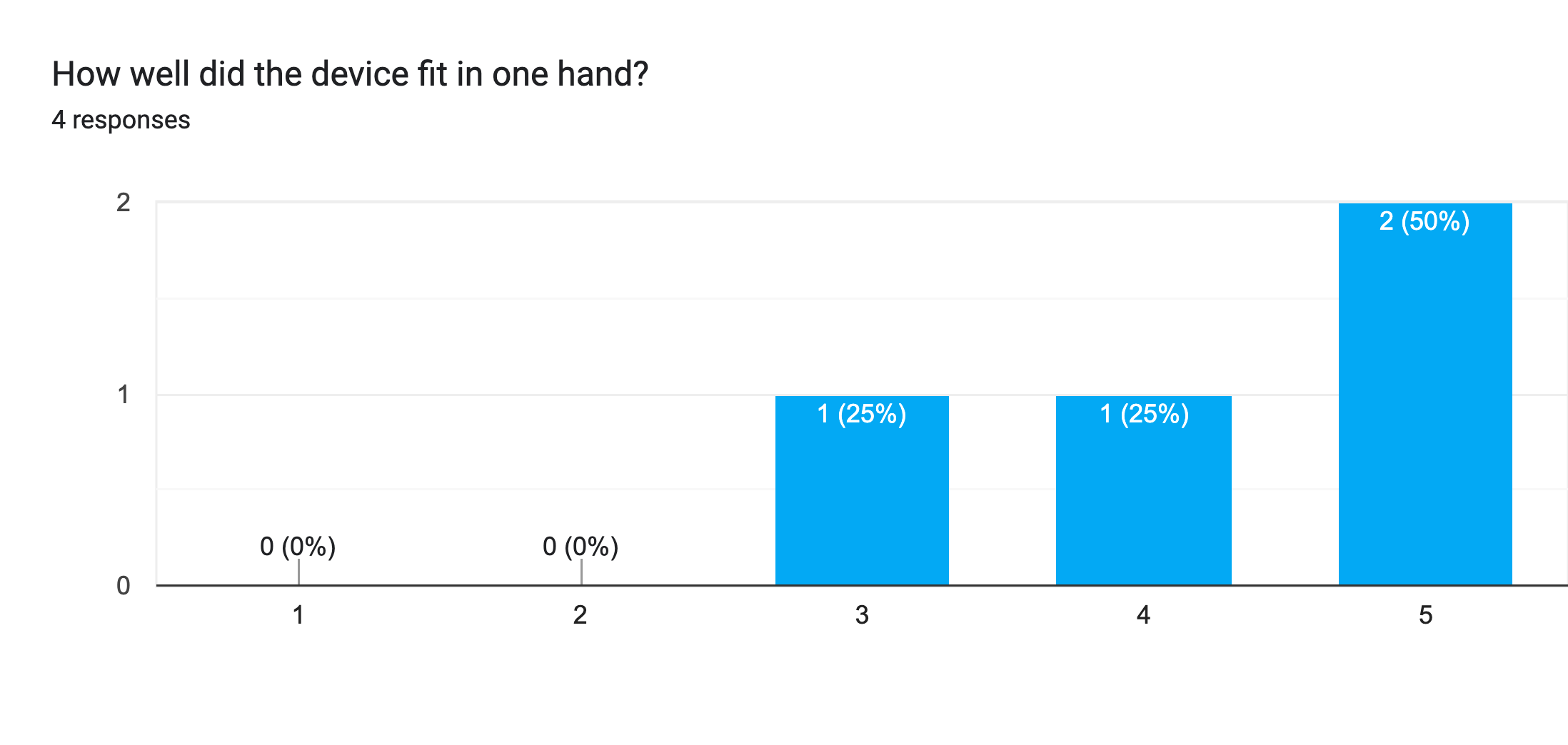
How well did the device fit in one hand?
Response: 75% reported 4/5 or 5/5 (like it was designed to fit), 25% reported 3/5
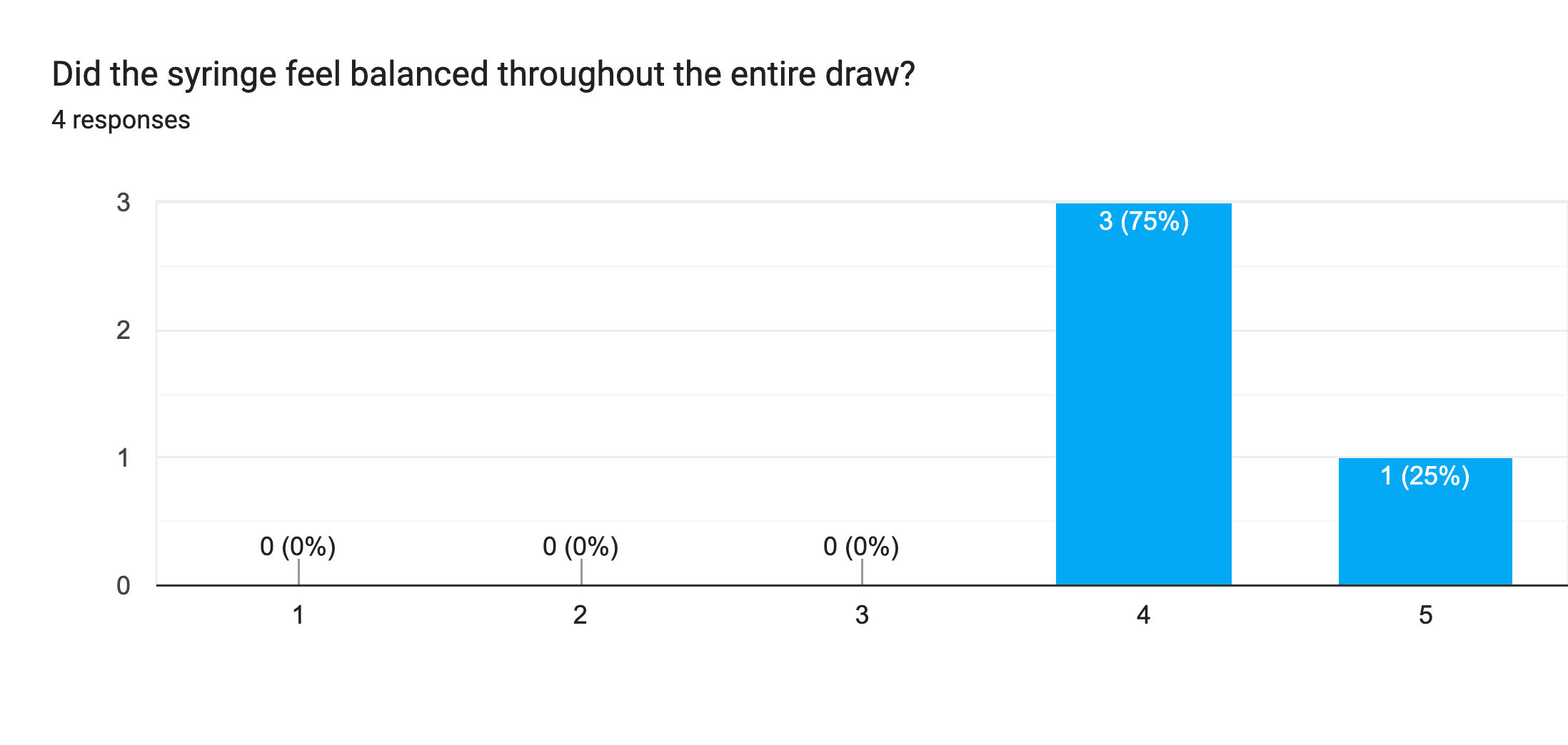
Did the syringe feel balanced throughout the entire draw?
Response: 100% reported 4/5 or 5/5 (very balanced the entire time)
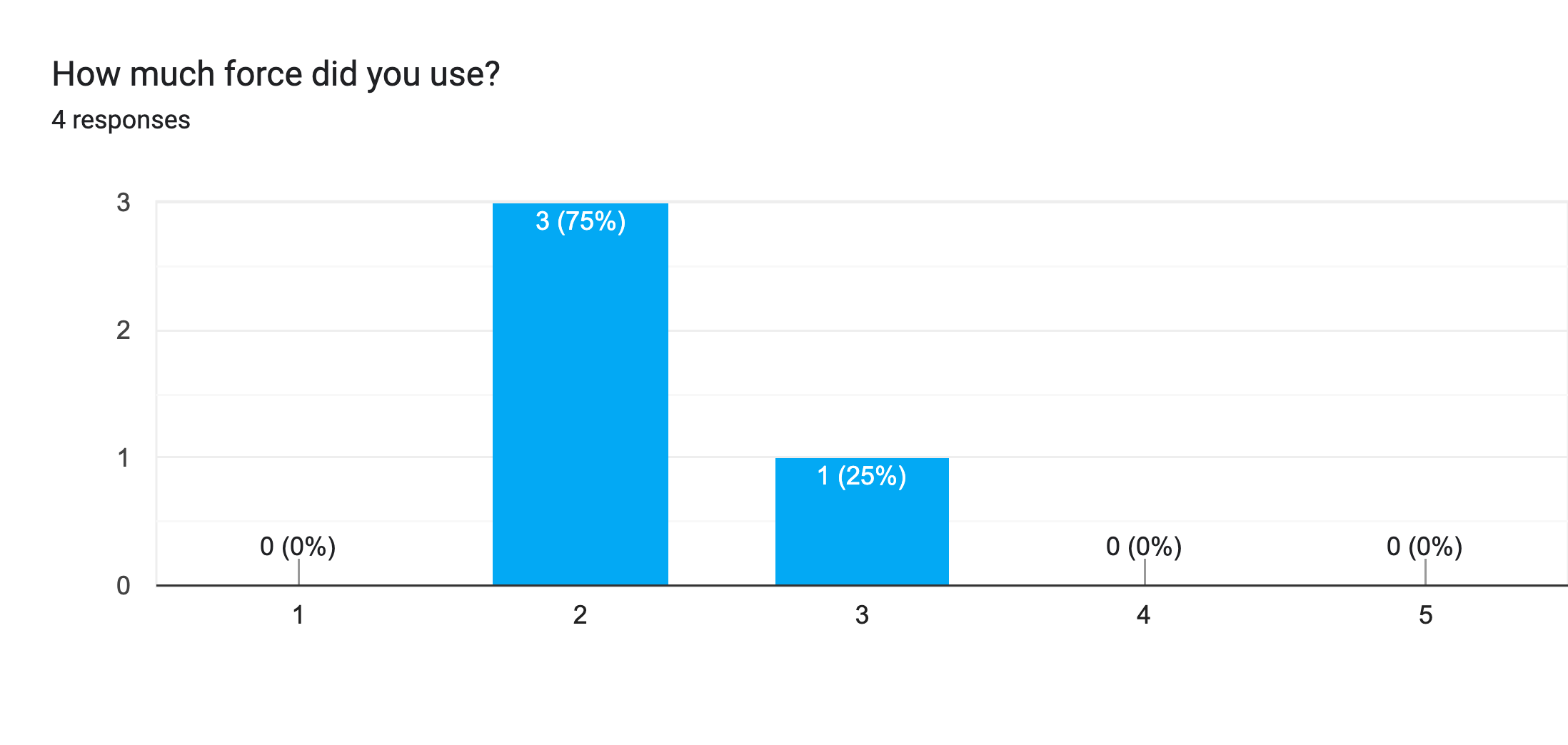
How much force did you use?
Response: 75% reported 2/5 (barely any), 25% reported 3/5
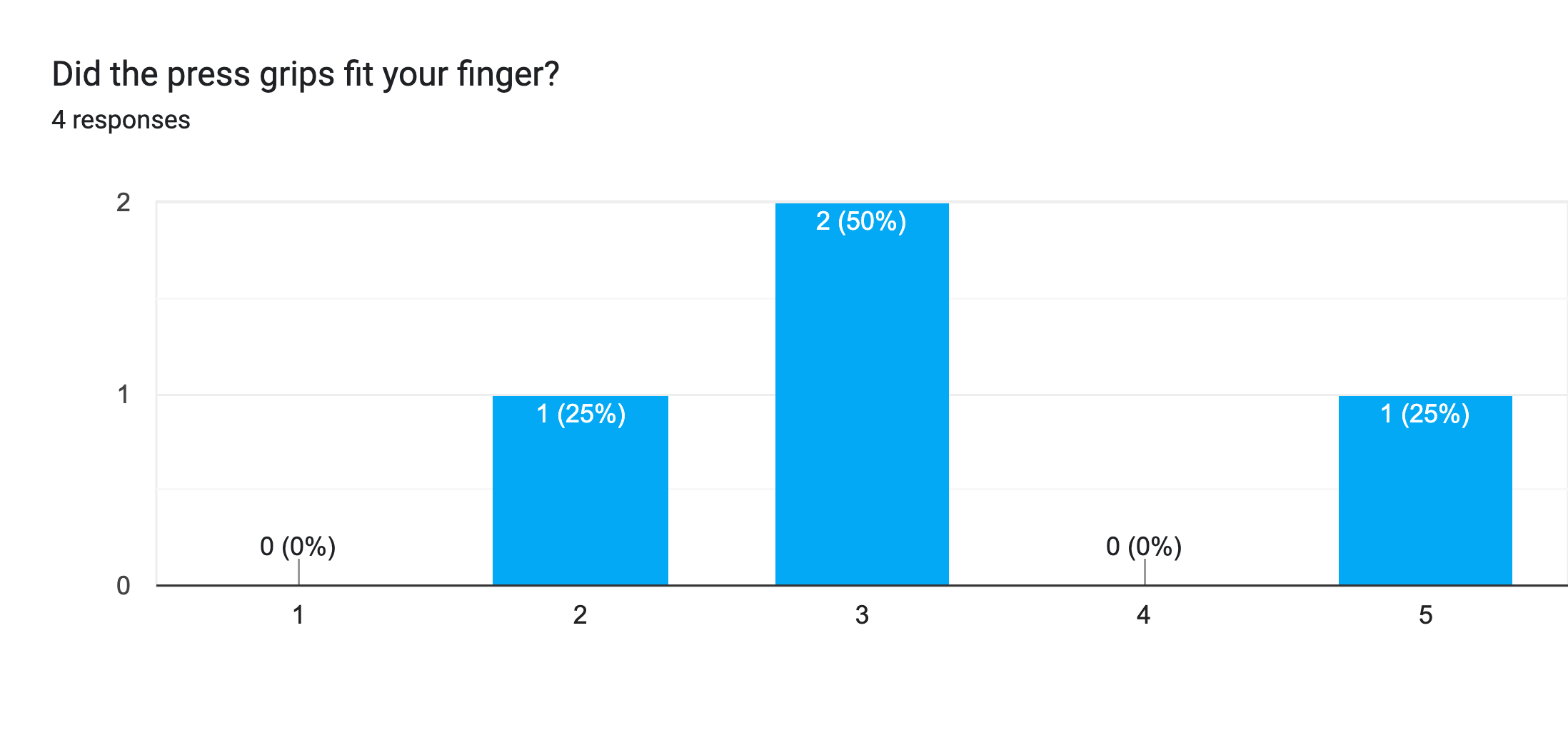
Did the grip fit your finger?
Response: 25% reported 5/5 (yes, perfectly), 50% reported 3/5, 25% reported 2/5 (no, not at all)
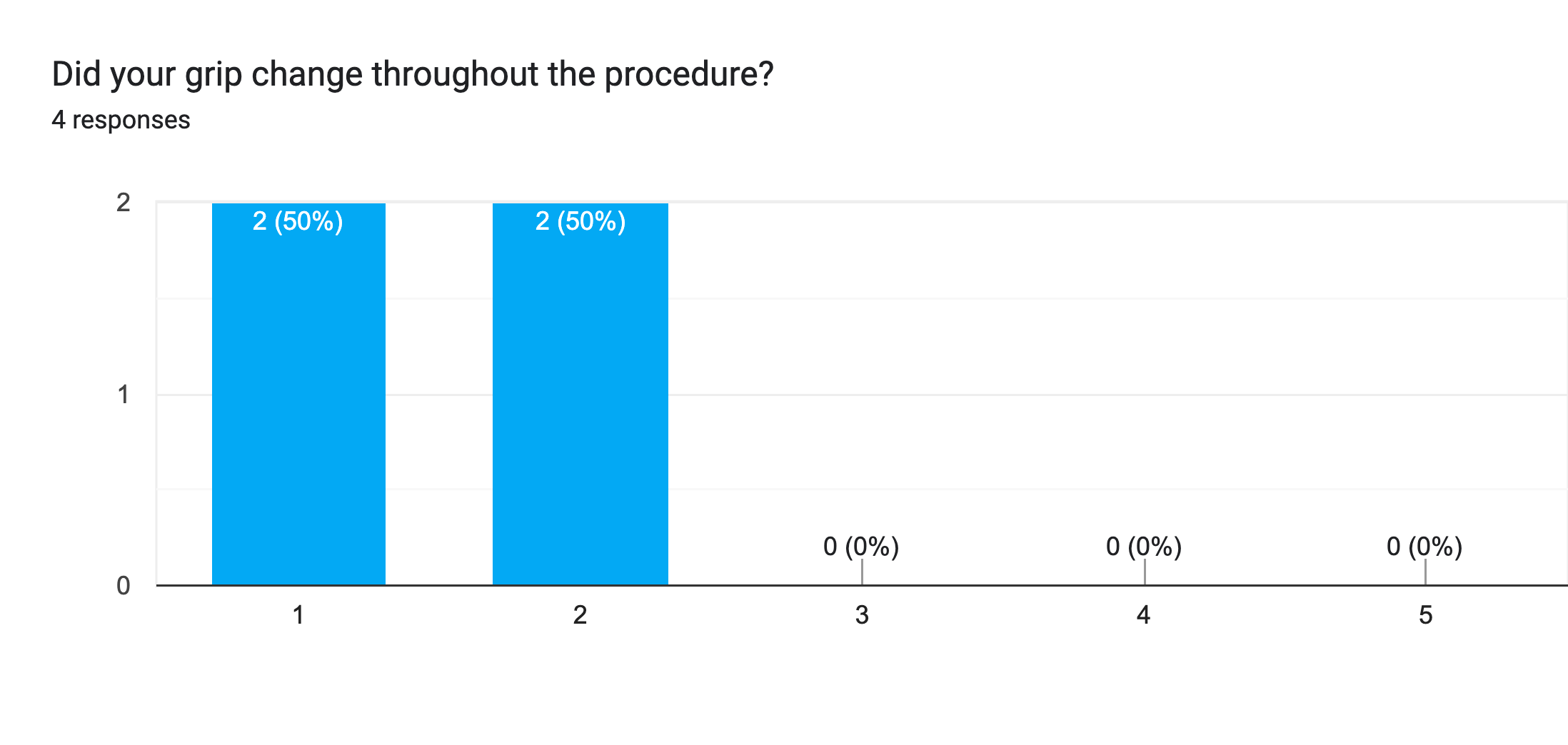
Did your grip change throughout the procedure?
Response: 50% reported 1/5, 50% reported 2/5 (no, not at all)
Summary
Overall, the device was well received from an ergonomics standpoint. The only major shortcoming based on survey results was the shape of the grip. Of the four respondents, three reported that the grip provided a subpar fit. This is an issue that will be met with changes to the grip design going forward. Specifically, the grip will be designed to fit a wider range of finger shapes and sizes.
Procedure Time and Draw Rate
Questions
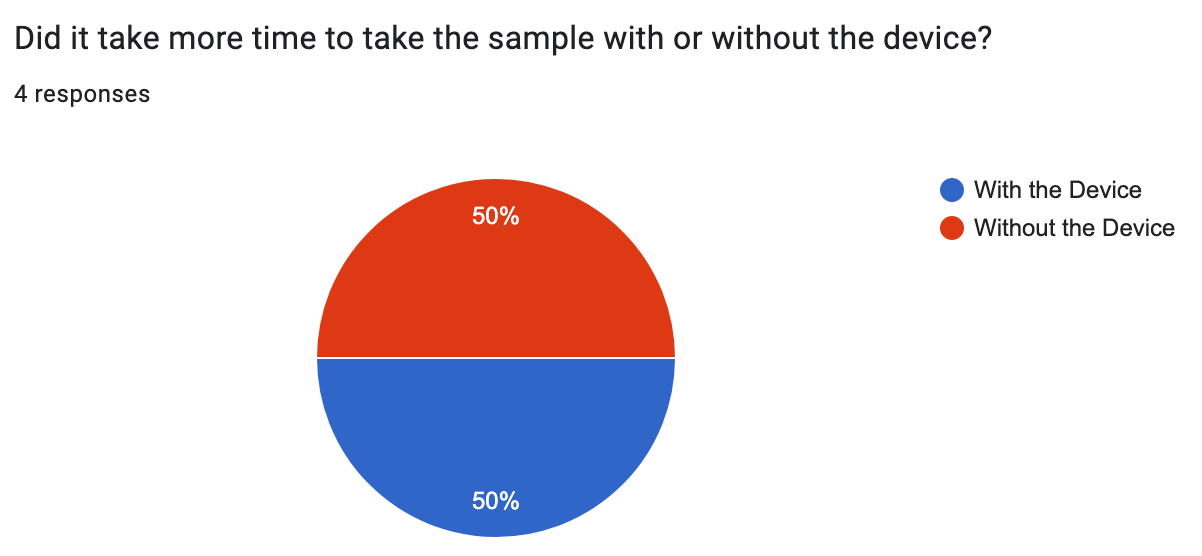
Question: Did it take more time to take a sample with or without the device?
Response: 50% reported with the device, 50% reported without the device
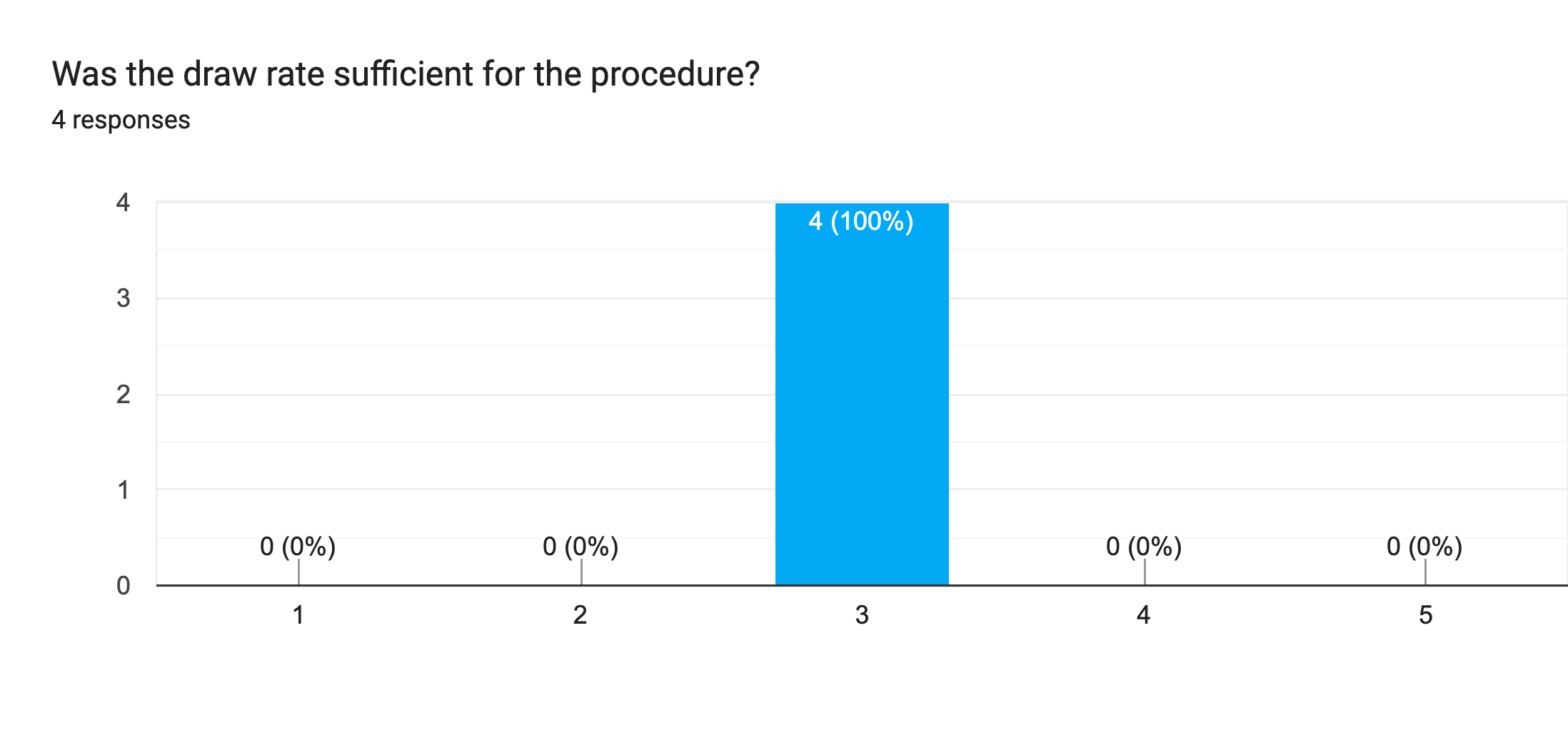
Question: Was the draw rate sufficient for the procedure?
Response: 100% reported 3/5 (not too fast or too slow)
Summary
Physicians did not have concerns relating the draw rate of the device. However, the overall procedure time could be a roadblock to the acceptance of the device. One likely explanation for the increased procedure time with the device is the difficulty in removing the device from the syringe (see Clip Stability Test in Performance Characteristics). This is something that will be addressed in future iterations of the clip, so this issue will not persist.
Visibility Criteria
Questions
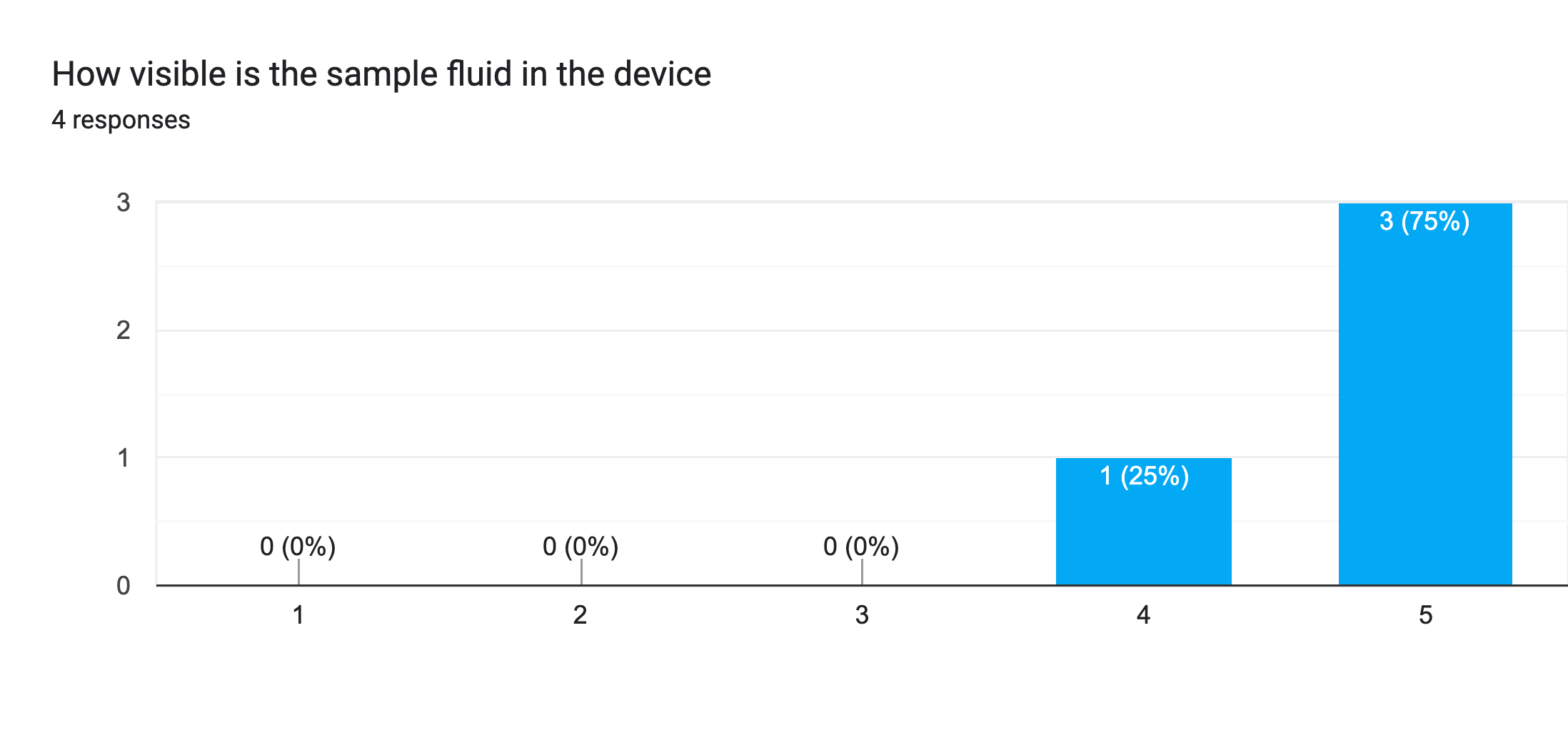
Question: How visible was the sample fluid in the device?
Response: 100% reported 4/5 or 5/5 (easy to see)
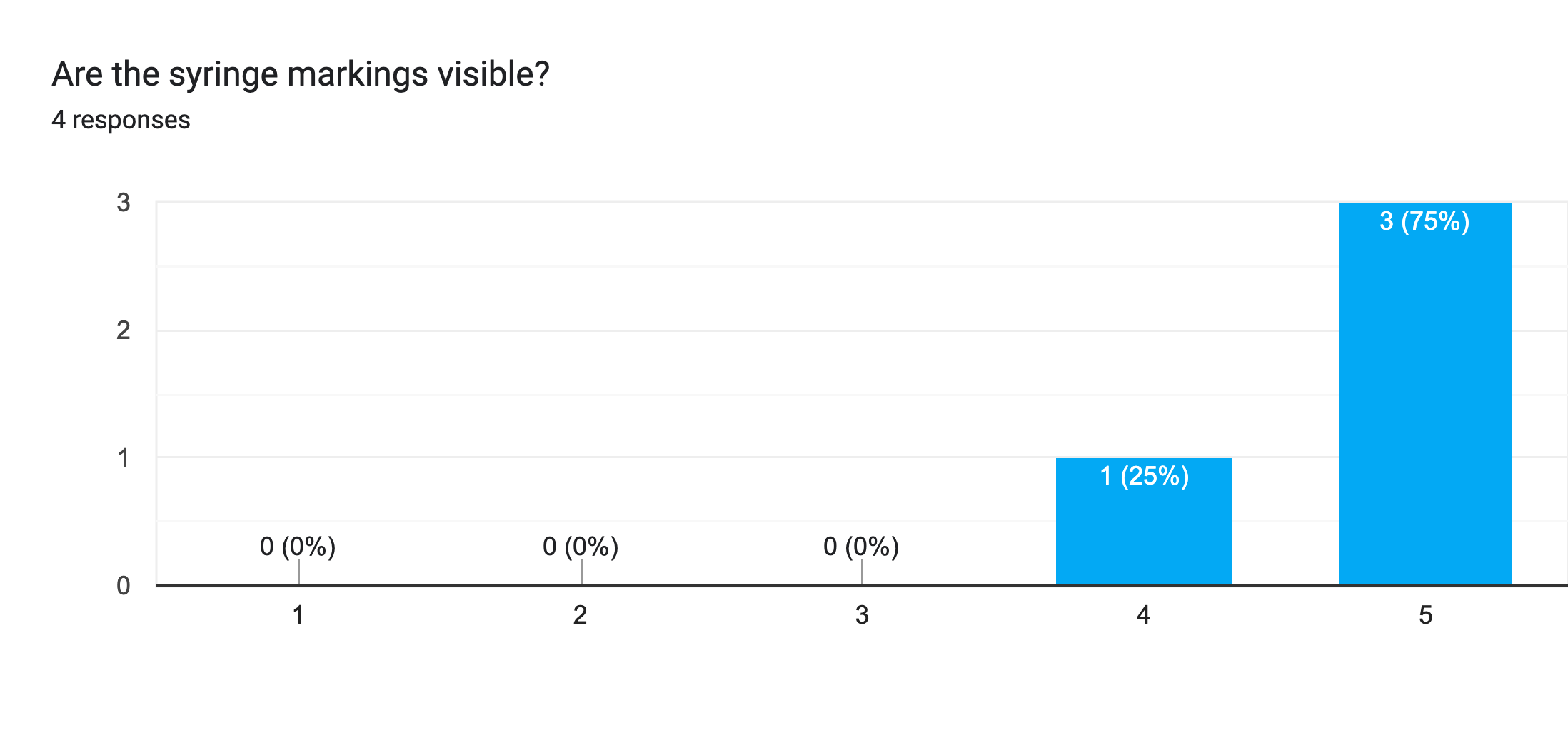
Question: How visible were the syringe markings with the device attached
Response: 100% reported 4/5 or 5/5 (easy to see)
Summary
Visibility of fluid and syringe markings were not a concern for respondents.
Maximum Sample Size
Questions
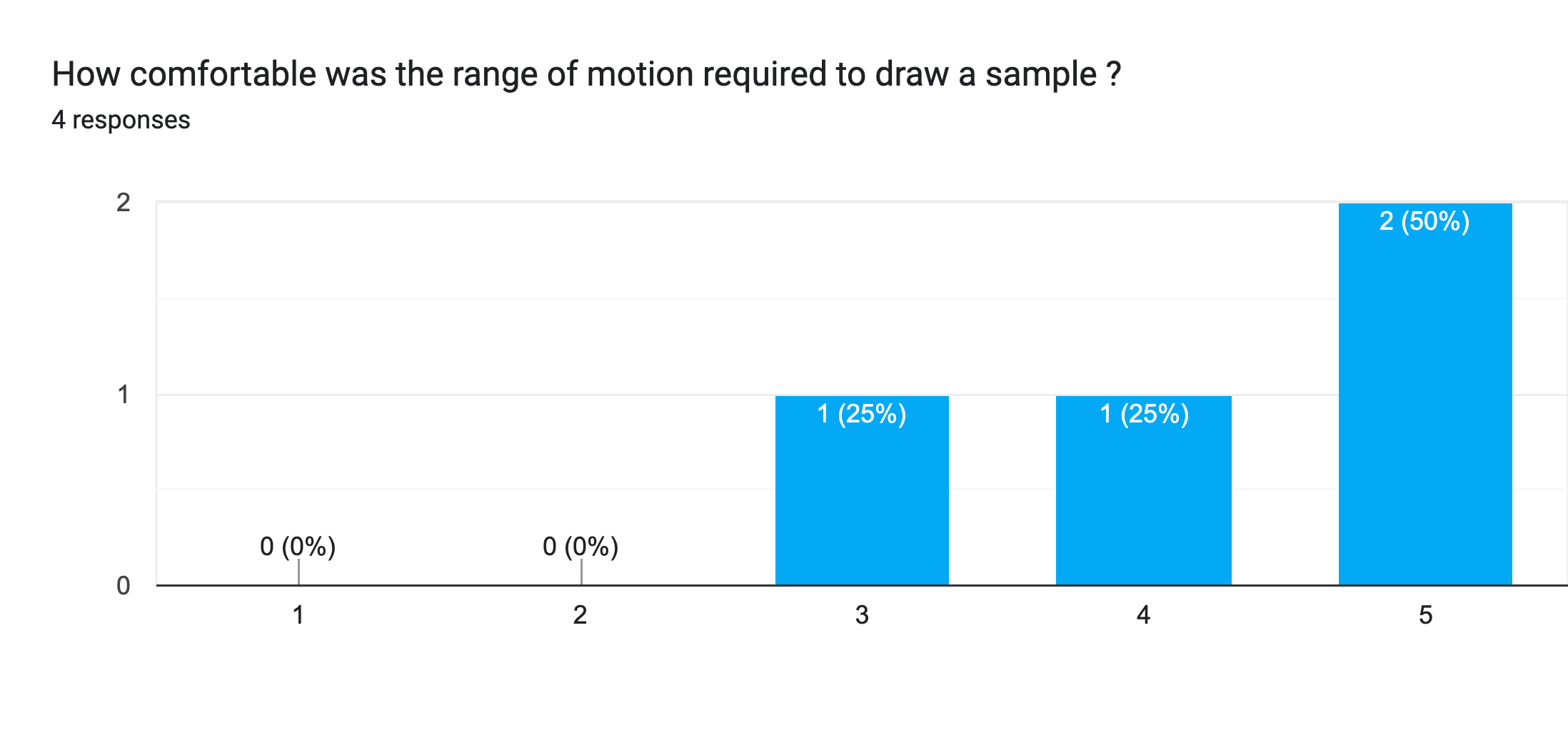
Question: How comfortable was the range of motion required to draw a sample?
Response: 75% reported 4/5 or 5/5 (very easy), 25% reported 3/5
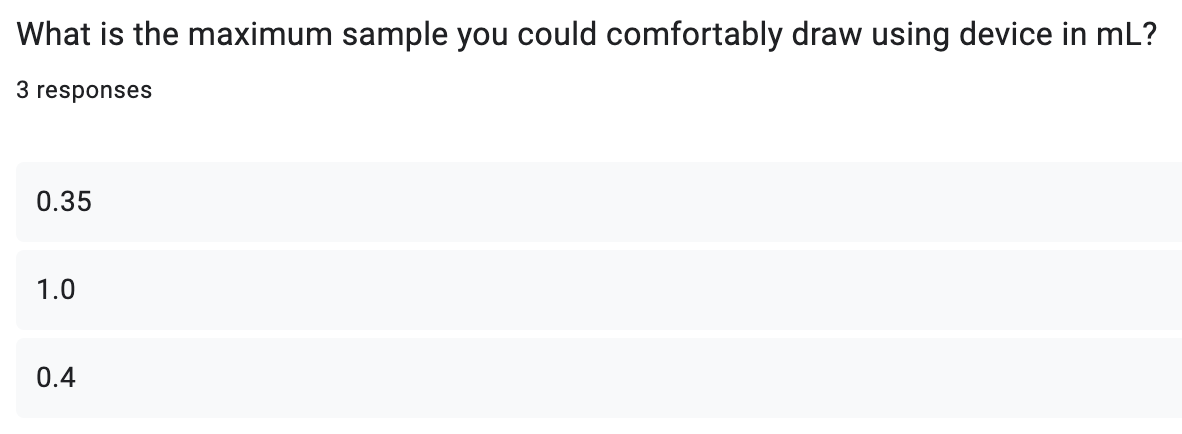
Question: In milliliters, what was the maximum sample size you could comfortably draw with the device?
Response: on average, 0.58 mL
Summary
Generally, physicians could comfortably draw more than the required sample volume.
Validation
Questions
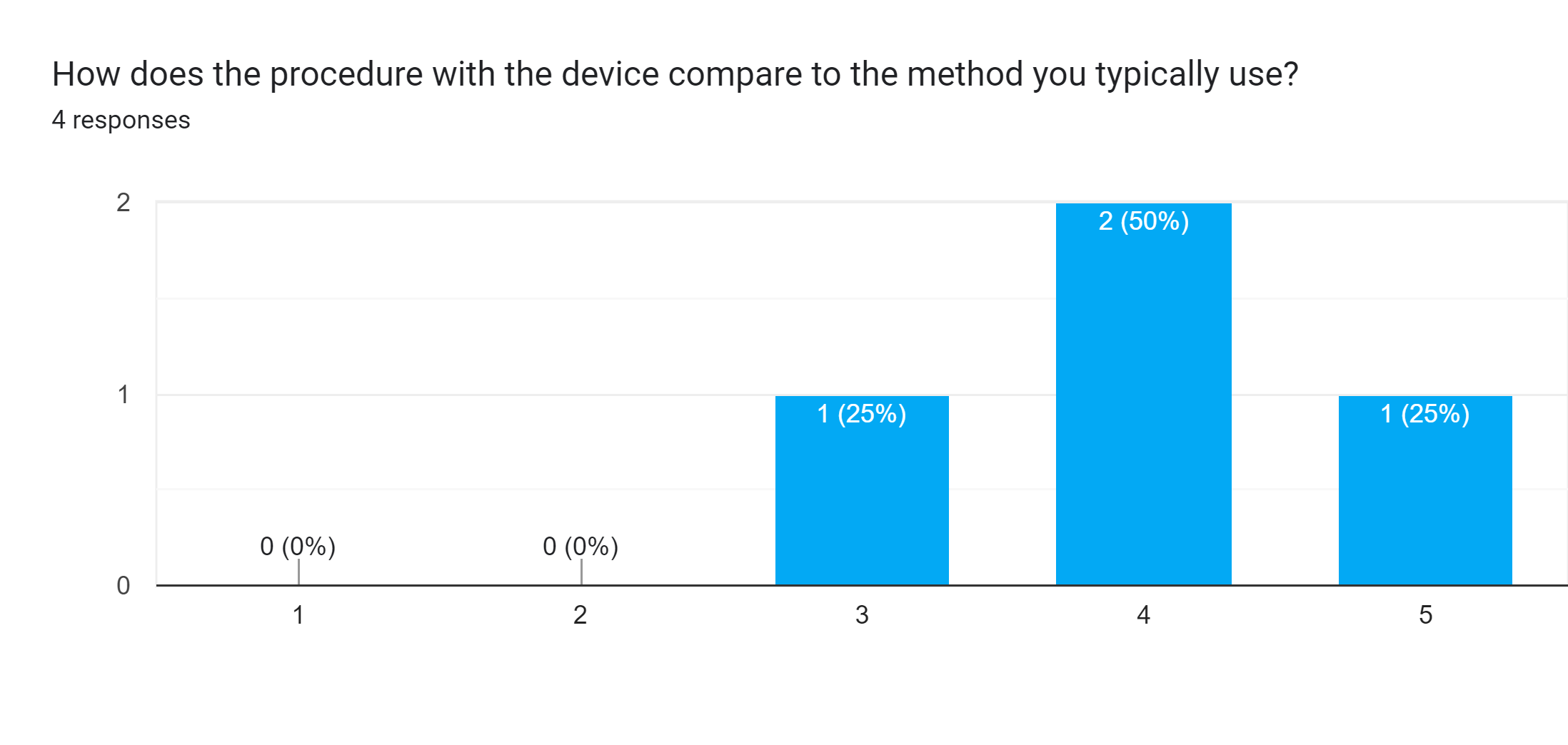
Question: How does the procedure with the device compare to the method you typically use?
Response: 75% reported 4/5 or 5/5 (much easier), 25% reported 3/5
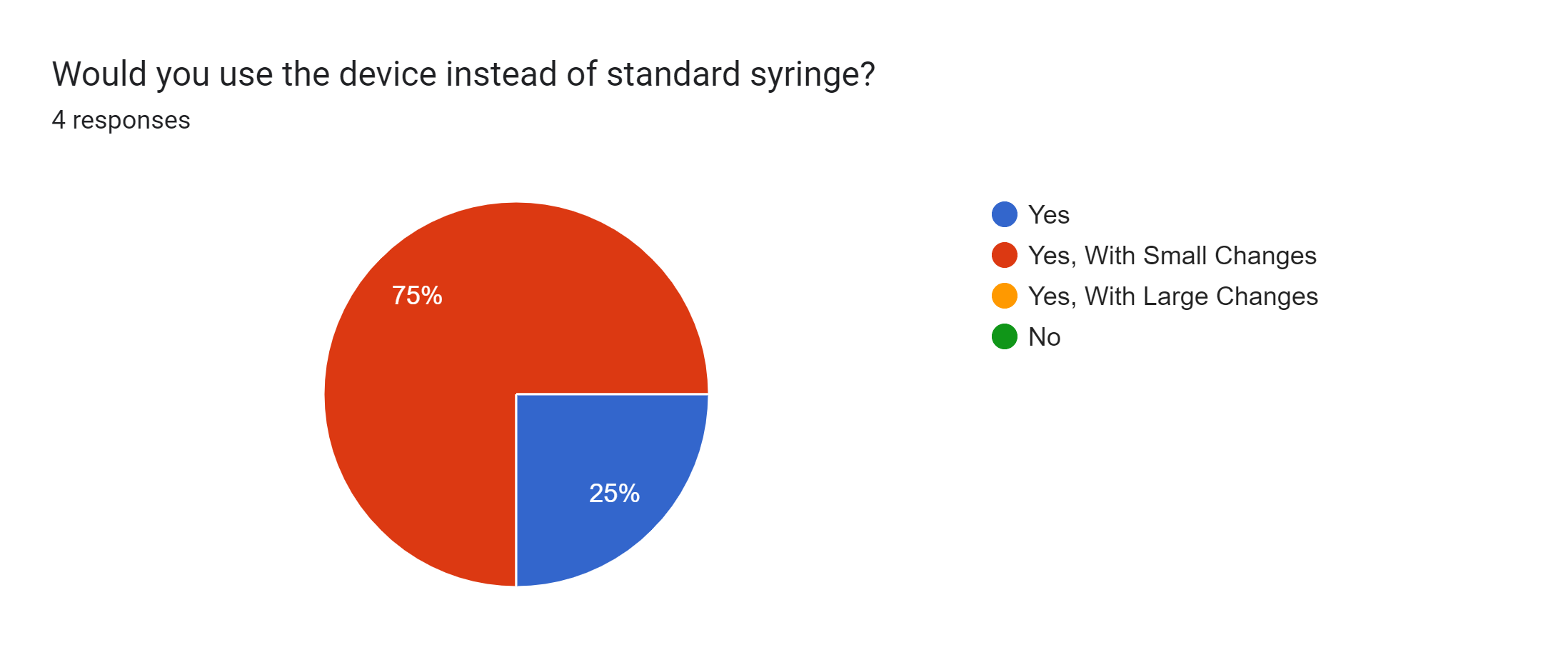
Question: Would you use this device instead of a standard syringe?
Response: 25% reported yes, 75% reported yes, with small changes
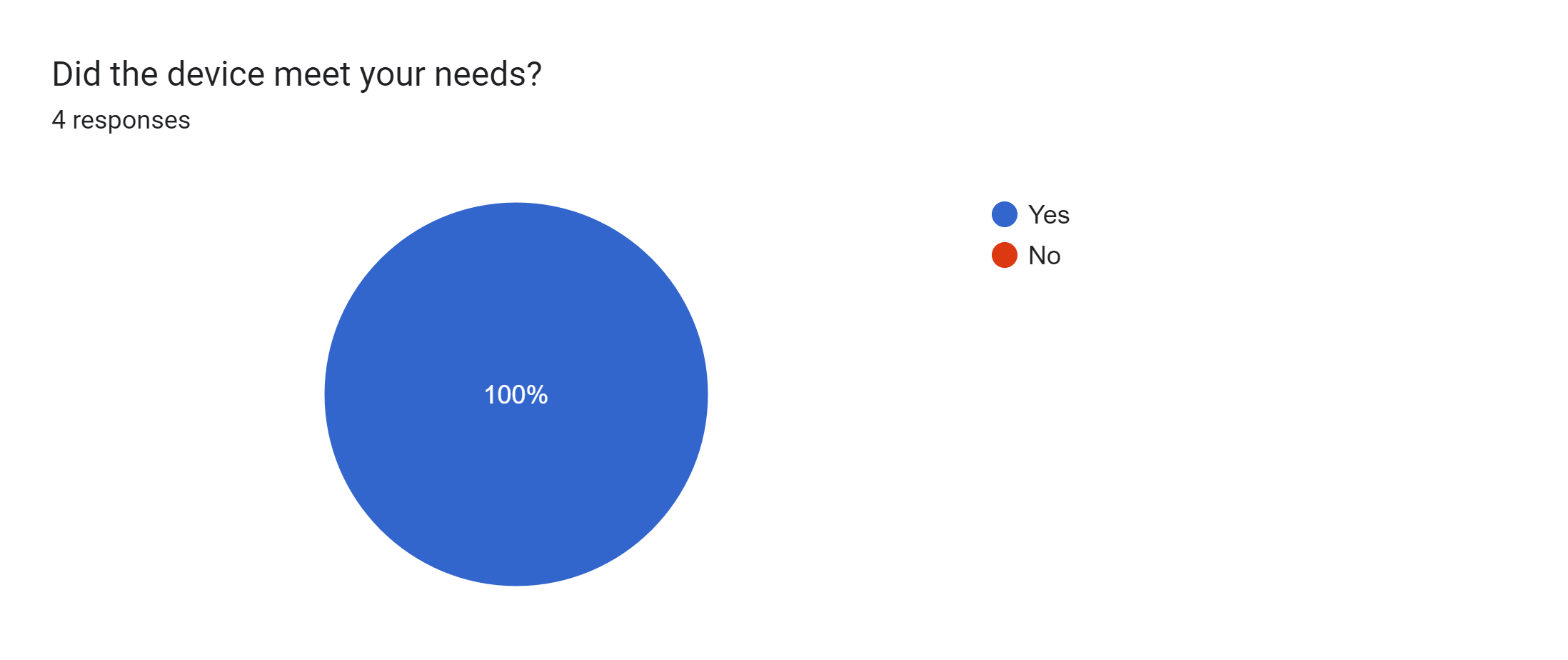
Question: Did the device meet your needs?
Response: 100% reported yes
Question: Additional comments.
Response (paraphrased): Device was too smooth, could benefit from textured grip. Grip was too small, could benefit from being larger. The guide does not provide enough stability.
Summary
Overall, respondents were pleased with the current design, but had some suggested changes, such as changing the grip shape or texture, and reworking the guide. Despite the requested changes, respondents reported that the device made the procedure easier and met their needs.