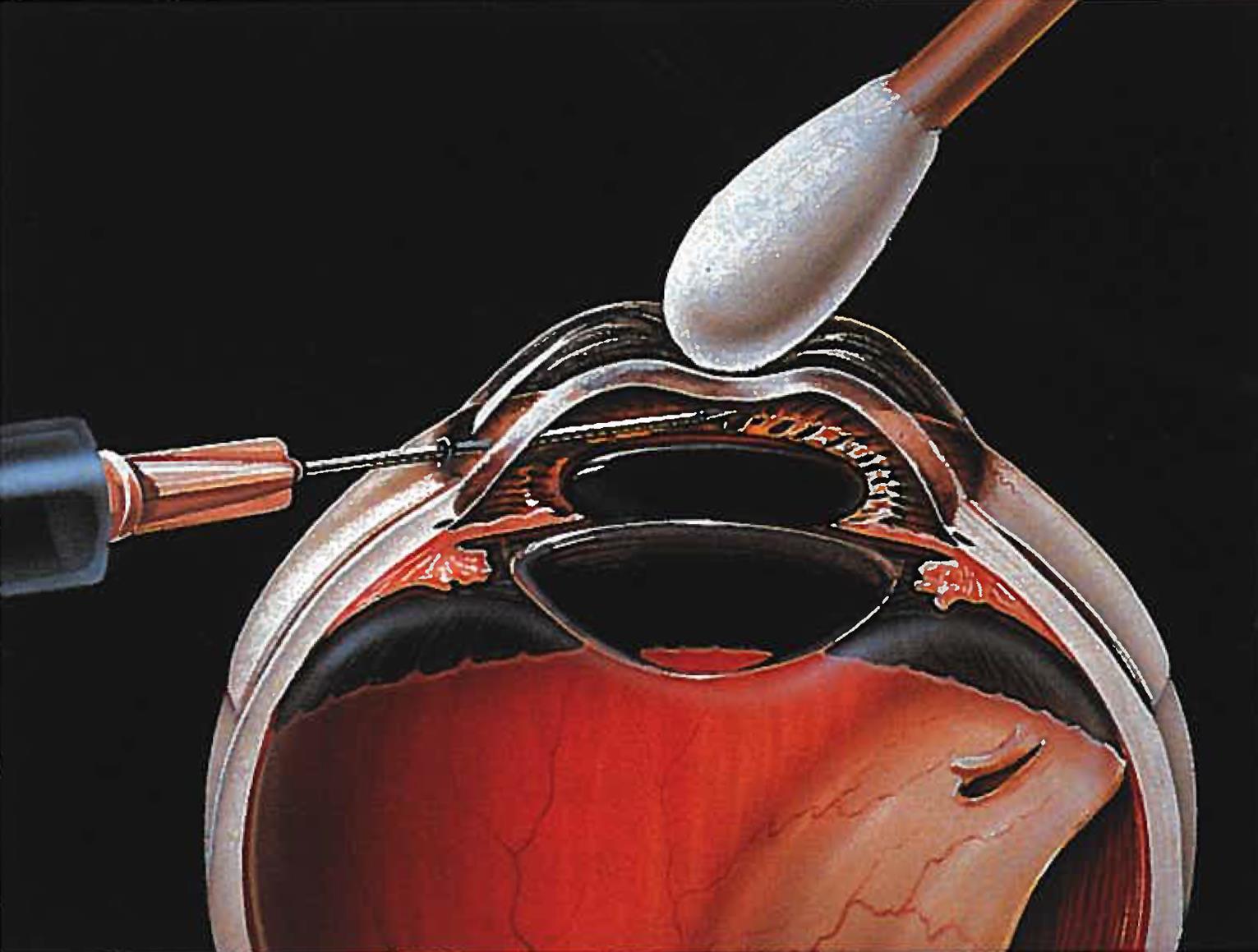
Anterior Chamber Parancentesis
Anterior chamber paracentesis, also known as anterior chamber tap (ACT), is a procedure that involves drawing out aqueous humor, the fluid located in the anterior and posterior chambers of the eye. There are two main reasons an ACT procedure may be performed: for therapeutic or diagnostic purposes.
1. Therapeutic
Purpose: To temporarily and immediately relieve intraoccular pressure [1].
Volume: Non-specific.
Result: Does not address the underlying cause for the elevated pressure or disease. Can relieve pressure for the injection of a therapeutic.
2. Diagnostic
Purpose: To draw out aqueous humor to send the fluid into the lab for testing [1].
Volume: 100-500 μL [1].
Result: Evaluates a large variety of diseases such as uveitis which includes two categories: inflammation (autoimmune) and infection (herpes, varicella, etc.), and lymphoma (including other cancers) [1].
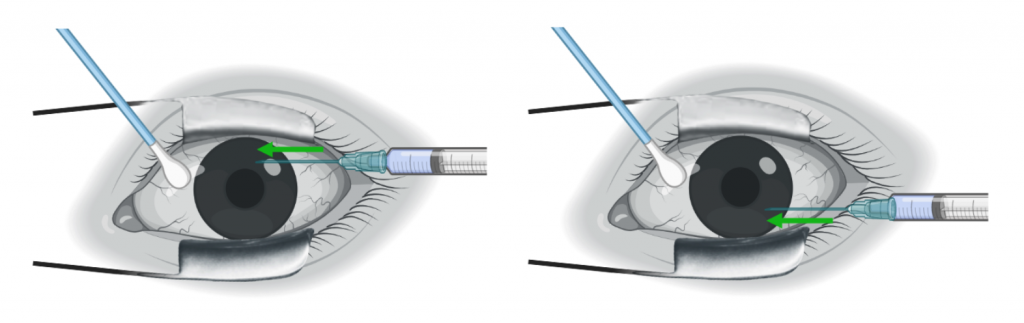
Requirements
Ophthalmologists need to avoid underdrawing fluid with a diagnostic ACT because labs need a certain volume to test. Additionally, ophthalmologists want to avoid overdrawing fluid because that could cause a collapse of the eye resulting in serious damage. Therefore, the accuracy required for ACT is high and the resulting device must reflect that accuracy.
Gap
Other than a standard 1 mL syringe and a slit lamp, there are no devices on the market that are being commonly used to assist with these procedures.
References
[1] R. Y. Zhao and V. Rashidi, “Interview with Dr. Rashidi,” 14-Oct-2022.
[2] “Paracentesis,” American Academy of Ophthalmology, 26-May-2021. [Online]. Available: https://www.aao.org/education/image/paracentesis. [Accessed: 23-Apr-2023].