How did we reach this solution?
Background
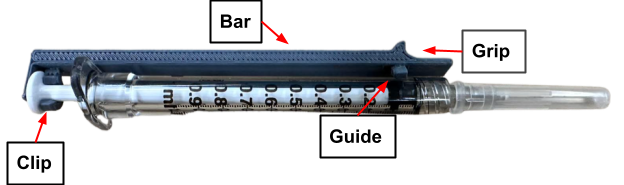
The aim was to design a device that would offer a simple solution to meet the needs of ophthalmologists regarding ACT. This procedure involves the use of a 1ml Luer-Lok syringe attached to a 28-33 gauge needle that an ophthalmologist then inserts into a patient's eye to withdraw aqueous humor. We first identified the needs of ophthalmologists and worked to understand the problem. Through clinical visits, it was concluded that physicians need an adaptable attachment to improve the ergonomics of how they handle a 1 mL syringe, in order to appropriately draw an accurate sample of aqueous humor, all while only using one hand.
First Approach
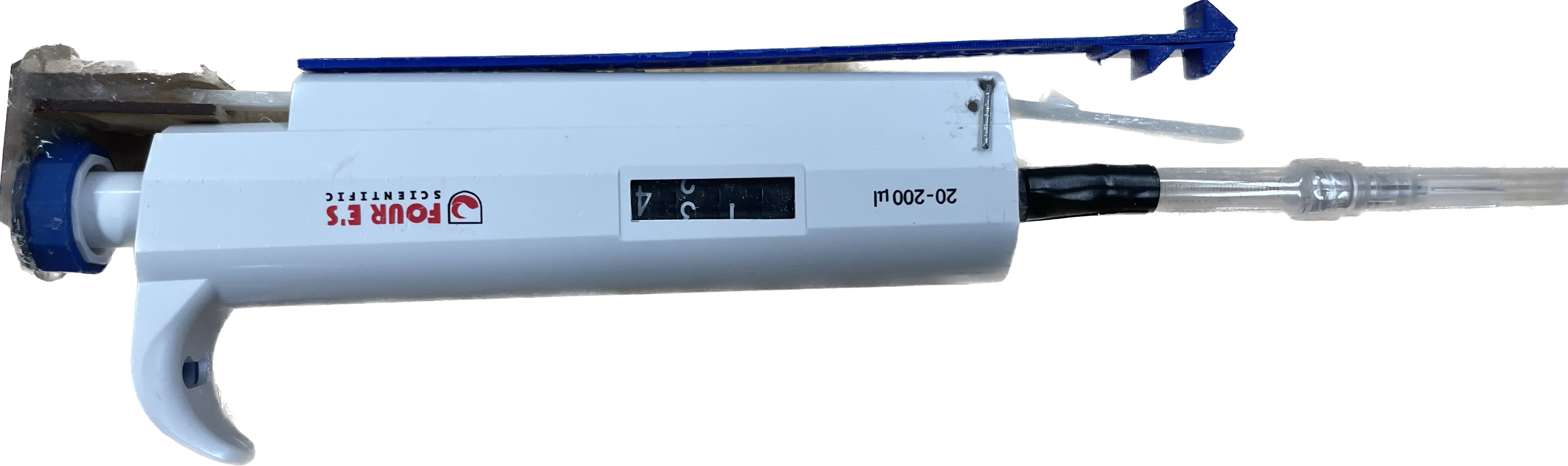
Understanding the nature of this issue, our team went to work. An original idea of using a modified micropipette was proposed. This design option aimed to offer a new solution by providing a new device design that used the basic principles of a micropipette to withdraw a biopsy sample from the eye. However, this idea proved to be flawed as it wasn’t addressing the unique needs of the ophthalmologist and needed more development. Through voice of customer testing, it was determined that a more simple design would better address the problem, so we decided to go back to the drawing board.
Final Approach
After careful consideration and many more discussions with several ophthalmologists, it was decided that a new approach would need to be taken to improve the quality of this procedure. This consisted of switching our design to a fully mechanical approach by applying an external device that served as an adapter to improve the ergonomics of this already existing 1 mL Luer-Lok Syringe. This simple design proved to be promising and led to prototyping and the overall development of the MonoGrip.