Weight Distribution Test
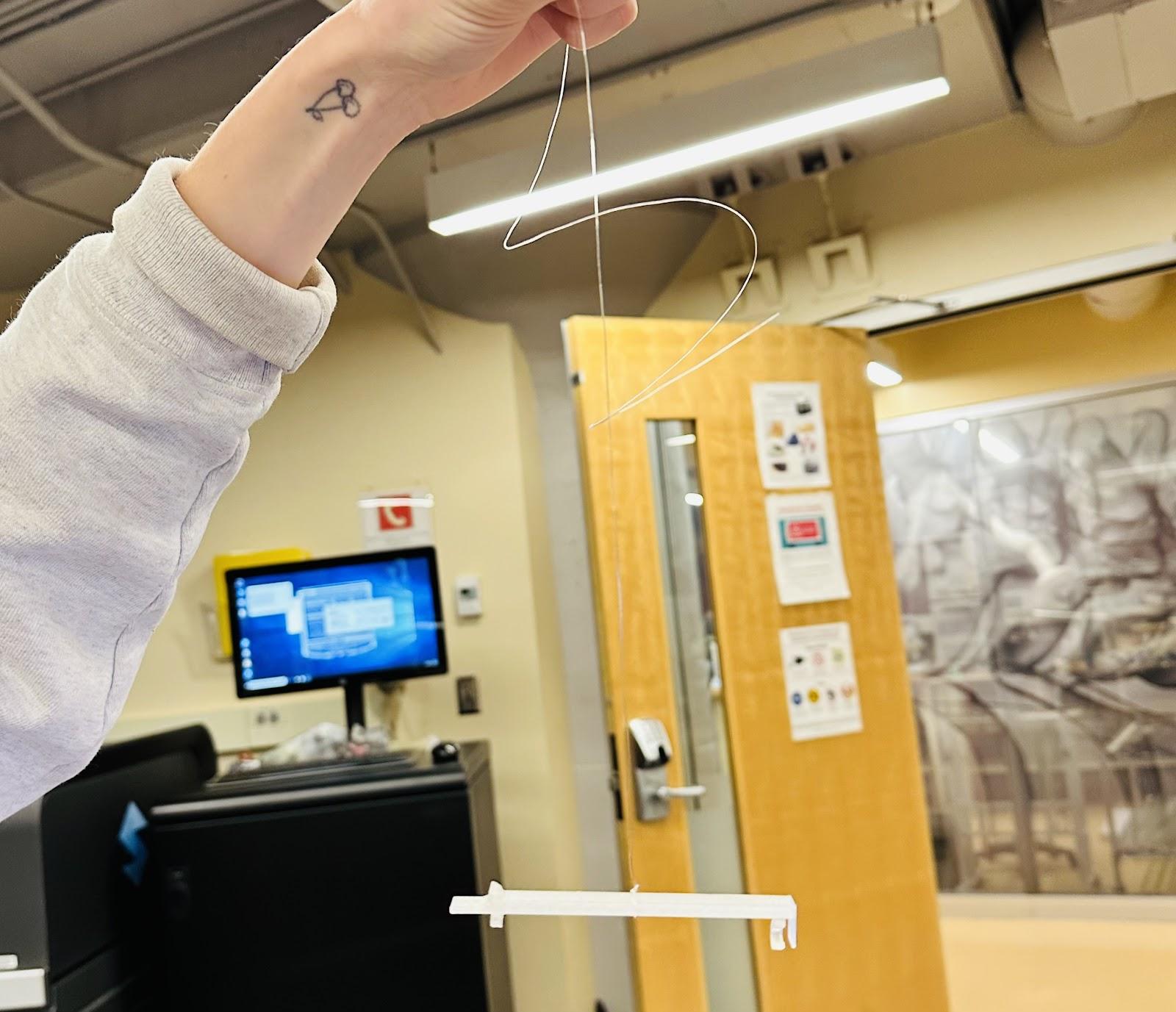
A demonstration of the weight distribution test, performed with the device suspended from a string. The string is difficult to see, but is located near the center of the device.
Test Description
This test aimed to measure the center of mass (COM) of the device. This was accomplished both experimentally and theoretically. First, a string was tied loosely to the device, and was slid around until the device was suspended perfectly horizontally. For the theoretical approach, Solidworks was used to predict the COM based on the CAD file.
Results
Both approaches yielded COMs less than 5 mm from the center of the device. This test result ensured that the device would not signficantly impact the overall COM of the device-syringe apparatus.
Operation Force Test
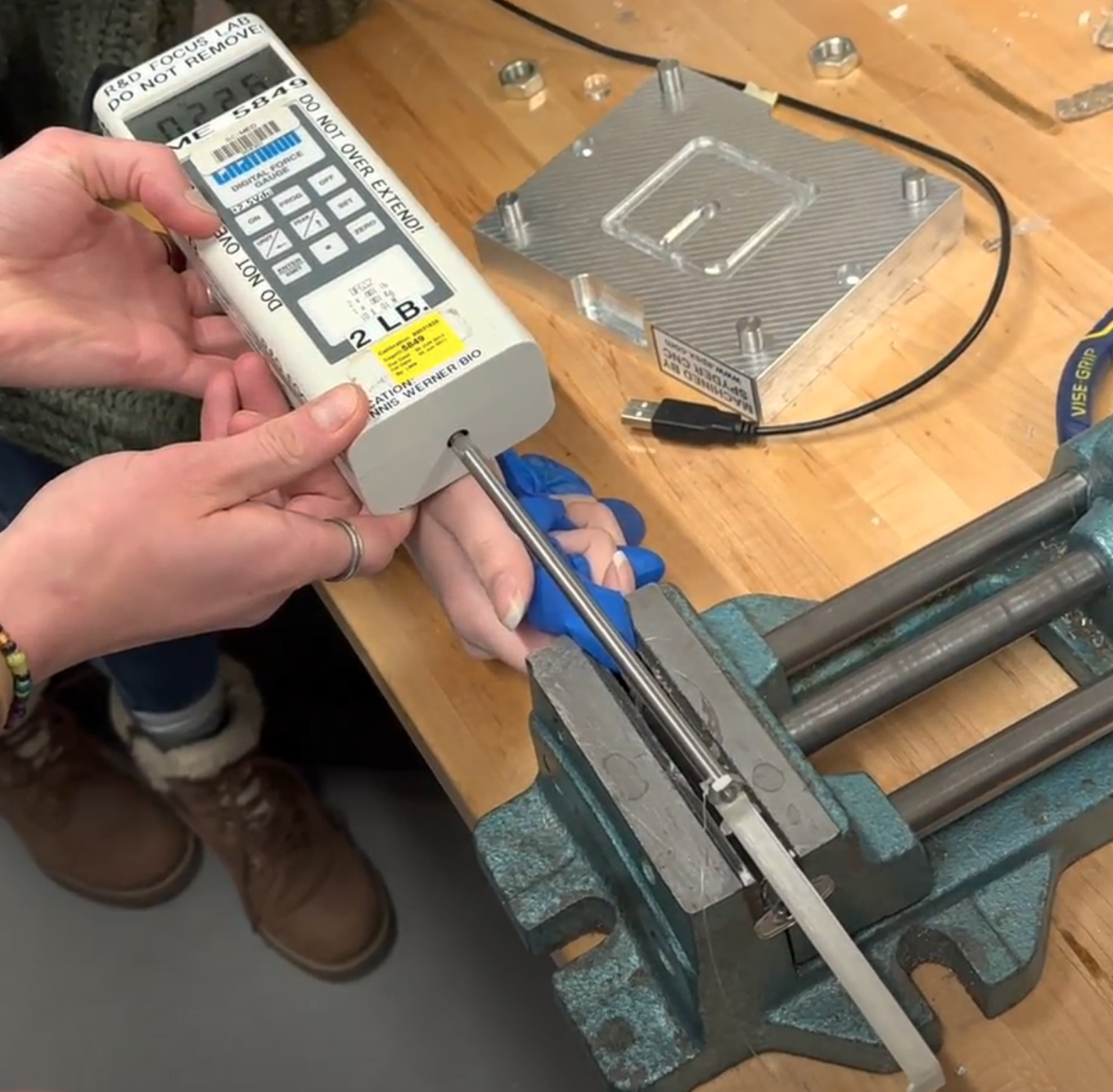
A demonstration of the operating force test, performed with a force gauge, a rubber glove filled with water, and a device attached to a syringe and needle.
Test Description
This test aimed to quantify the force required to operate the device and ensure that it was under the required limit of 22 N. To accomplish this, the device was attached to a syringe and held in place with a vice. The needle of the syringe was inserted into a container of water. A force gauge was then used to push on the grip and draw water. The force reported by the force gauge was recorded three times throughout each trial and was averaged.
Results
The average force required to operate the device was less than 3 N, which was significantly lower than the upper limit of 22 N. The device was therefore easily operable in terms of force required.
Physical Dimensions Test
Test Description
The purpose of this test was to ensure that the device was not overly large or bulky. The total length of the device was measured. The device was attached to a syringe and the total distance from the center of the syringe to the top of the device was measured as the device radius.
Results
The device was about 90 mm long and had a radius of 10 mm. Based on these measurements and statements from physicians, the device was not overly bulky.